
Embracing the Sun: A Journey into Solar Energy and Yoga

Updated: Mar 26
by Medha Bhaskar
The sun has long been conceived as the source from which life on Earth emanates. It has stood at the center of human worship since the Bronze Age (~3000 BC). Across civilizations, it has been revered as the dispeller of darkness, the keeper of rhythm, and the quiet architect of life itself. In the Vedic pantheon, the sun appears as Surya, one of its most important deities, honored through temples, festivals, and daily rituals. In Sumerian-Akkadian culture, he is Shamash. In Greek mythology, Helios. In Germanic traditions, Sol. In Zoroastrianism, Mitra. In Shinto, Amaterasu. In Incan cosmology, Inti. Proto-Indo-European thought imagined the sun as the eye of the sky-father Dyeus — a cosmic organ of perception. Many yogic texts describe the inner spirit as “shining like a thousand suns.”

Our language and expressions still carry this solar legacy. We speak of brilliance, radiance, and sunny dispositions. Illumination is synonymous with understanding. A place “where the sun doesn’t shine” suggests both physical and psychological darkness. Depression is often attributed to the loss of the sun’s warm embrace. Even our most calming visualizations in meditation often revolve around sunrise and sunset, when the world appears briefly suspended in balance.
The Sun: Illuminator of Life
The sun is at the center of life as we experience it. It not only illuminates our world but also our souls. It wakes us up, brings light, and transforms our being. In yoga, we believe that the outer universe is reflected in our inner being. Thus, solar energy is one of the two polar forces that regulate our natural rhythm.
Within the body, solar energy represents the principle of fire, movement, and will. Poetic traditions describe it as an outward-flowing, stimulating, masculine force. It helps us wake in the morning, sharpens our appetite, and brings a sense of freshness to life. Channelled primarily through the Pingala Nadi (the solar pathway that runs along the right side of the spine), it governs digestion, muscle tone, posture, and endurance. It converts food into fuel and prepares the body for action. In the mind, it fuels ambition, discipline, and drive.
Furthermore, solar energy concentrates in the Manipura Chakra, closely associated with the solar plexus, a dense network of nerves beneath the rib cage. This center is responsible for the process of self-definition. Working with solar energy at the Manipura cultivates a sense of Self that is resilient, rooted, and beyond threat. The sun is often depicted holding the Dharmachakra, the wheel of law and order, suggesting that courage, discernment, and moral clarity are regulated by this solar intelligence.

The Balance of Solar Energy
When this energy is balanced, we feel clear and charged, capable of sustained effort and decisive action. Without it, we become cold, heavy, lethargic, withdrawn, and unmotivated. Inertia sets in, and we feel it in our bodies as slowed metabolism, circulation issues, and a dull, unresponsive nervous system. This manifests as constant fatigue, reliance on stimulants, and the sense of having to push ourselves through even simple tasks.
On the flipside, solar energy has a sharp edge. When it burns too hot, the same force that builds life begins to consume it. Excess Pingala shows up as agitation, irritability, overheating, inflammation, insomnia, nervous exhaustion, and burnout. Hunger becomes erratic, and we feel a loss of rhythm as the rest we take feels inadequate. The mind refuses to shut down. You may know this pattern too: being wired but tired, driven but depleted, productive but constantly on edge.
What Does Balance Look Like?
So, what does balance look like? The ability to channel solar energy results in a harmonious circadian rhythm of activity and rest, inner strength and confidence, and a clear, perceptive mind. Yogis have used this energy for spiritual growth for centuries. We believe that this potent vital energy can clear internal obstacles that cloud perception and action, burning karmic imprints.
How to Work with the Sun’s Energy
For a hatha yoga practitioner, working with solar energy is about learning to identify the sun’s effects and cultivating it through balance to build an effortless life. Traditionally, solar practices are placed early in the day, when the nervous system is naturally shifting from rest to activity. Exposure to daylight, regular movement, warm nourishing food, consistent sleep, and daily routines that respect natural timing all support this current. Without these, even the most refined practice struggles to take root.
In an interesting exploration of the sun’s energy, Rama is said to have received the Aditya Hrudayam from Sage Agastya before the battle of Lanka. A fatigued, contemplative Rama was taught this set of mantras to regain inner conviction and strength to face Ravana. This surge in the strong solar current is said to have helped Rama stabilize attention and be clear in the face of the biggest battle of his life.
Thus, to wake us up from slumber or dullness, we can use asana, pranayama, mantra, and meditation. In this, Surya Namaskara remains one of the most effective tools. The vigorous practice of alternating actions of forward folds, backbends, lunges, and inversions raises the heart rate, mobilizes the spine, and pushes circulation into every part of the body. Practiced alongside the breath, it generates heat without frenzy and establishes rhythm, increasing energy in the body. This is why it often forms the opening sequence of a Hatha Yoga practice: it prepares the body and mind for the deeper, subtler work that follows.
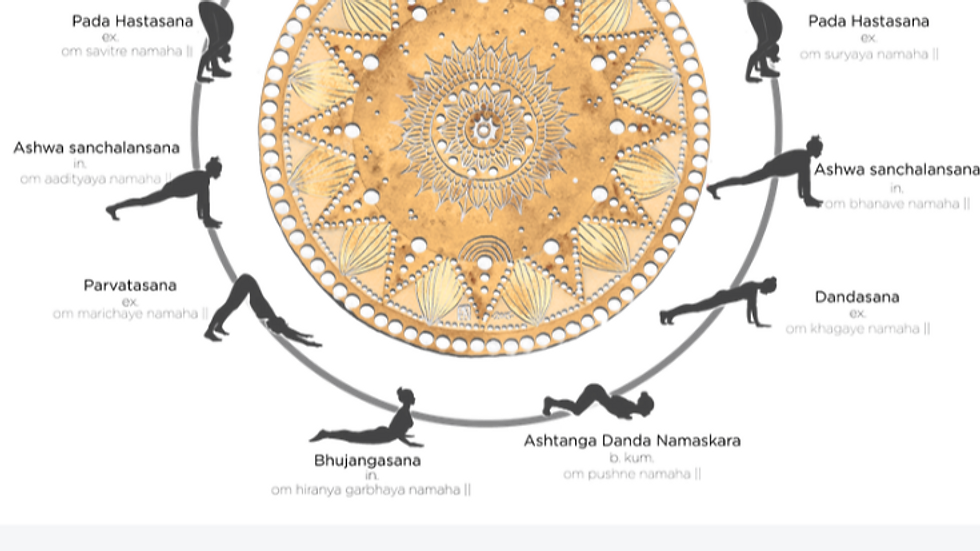
Cultivating Solar Energy in Postures
Solar energy is also cultivated in standing postures that require the legs to support the body’s weight and maintain steadiness. These postures build endurance, confidence, and postural integrity. Backbends demand a different quality of solar engagement: courage without aggression, openness without collapse. Abdominal work strengthens the solar center at the Manipura Chakra, supporting digestion, willpower, and emotional resilience.
Pranayama offers more direct access to this current. Kapalabhati and Bhastrika are deliberate encounters with internal heat, sharpening attention while stimulating metabolism. Surya Bhedana, right-nostril breathing, specifically activates Pingala Nadi, increasing alertness and readiness for action. These practices are powerful and must be used judiciously, with sensitivity to one’s current state.
Awakening the Sun Within
To awaken the sun within is to reconnect with a force that humans have oriented themselves around for millennia. A strong solar current gives the capacity to act. A balanced one gives the wisdom to act well. For the practitioner, the real inquiry lies here: where does your energy need kindling, and where does it need restraint? Learning to answer that is the heart of working with the sun.
In this journey, I invite you to explore your relationship with solar energy. How does it manifest in your life? Are you embracing its warmth, or are you feeling its intensity? As you delve into these questions, remember that the sun is not just an external entity; it resides within you, waiting to be acknowledged and nurtured.
Let us honor this ancient connection and allow the sun's energy to guide us towards a more vibrant, balanced existence.


Comments